HELP! A Beatles Tribute
21 February 2027

Music
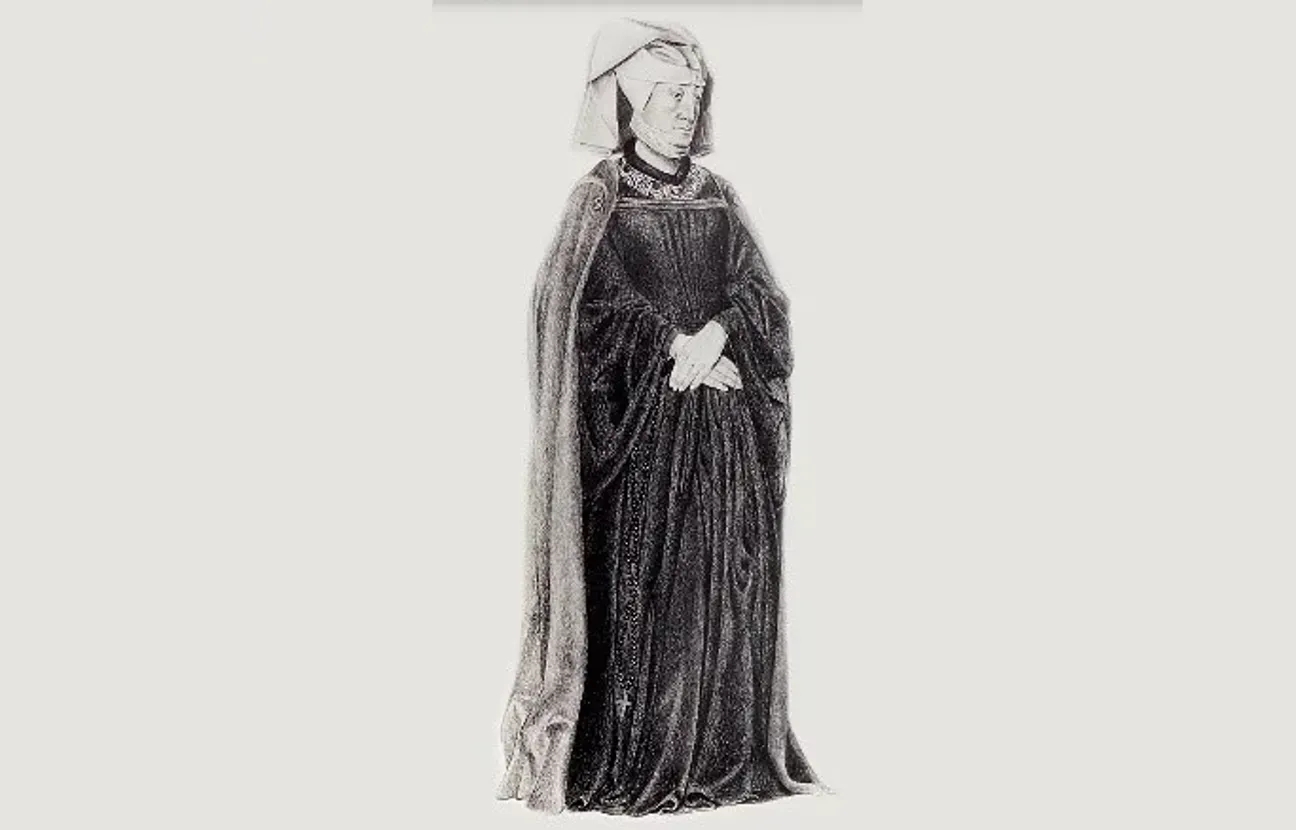
Johanna van Polanen comes from a wealthy family and, at the age of 11, is married off to the impoverished German Count Engelbrecht I of Nassau. She gains a higher title and he gains money. A win-win, then!
This marriage lays the foundations for the Dutch royal family.
From the solemnisation of the marriage onwards, Breda no longer has to pay tax on the beer brewed in the city—an enormous advantage!
Johanna commissions the construction of the Wendelinus Chapel, now the Walloon Church, while Engelbrecht commissions the Onze Lieve Vrouwe Kerk, now known as the Great Church of Breda.
Johanna is the mother of Jan IV of Nassau (1410), heir to the Dutch and German Nassau possessions.
Bas is an artist and illustrator who often creates mixed-media projects in which he experiments with collage, animation, sculpture and illustration.
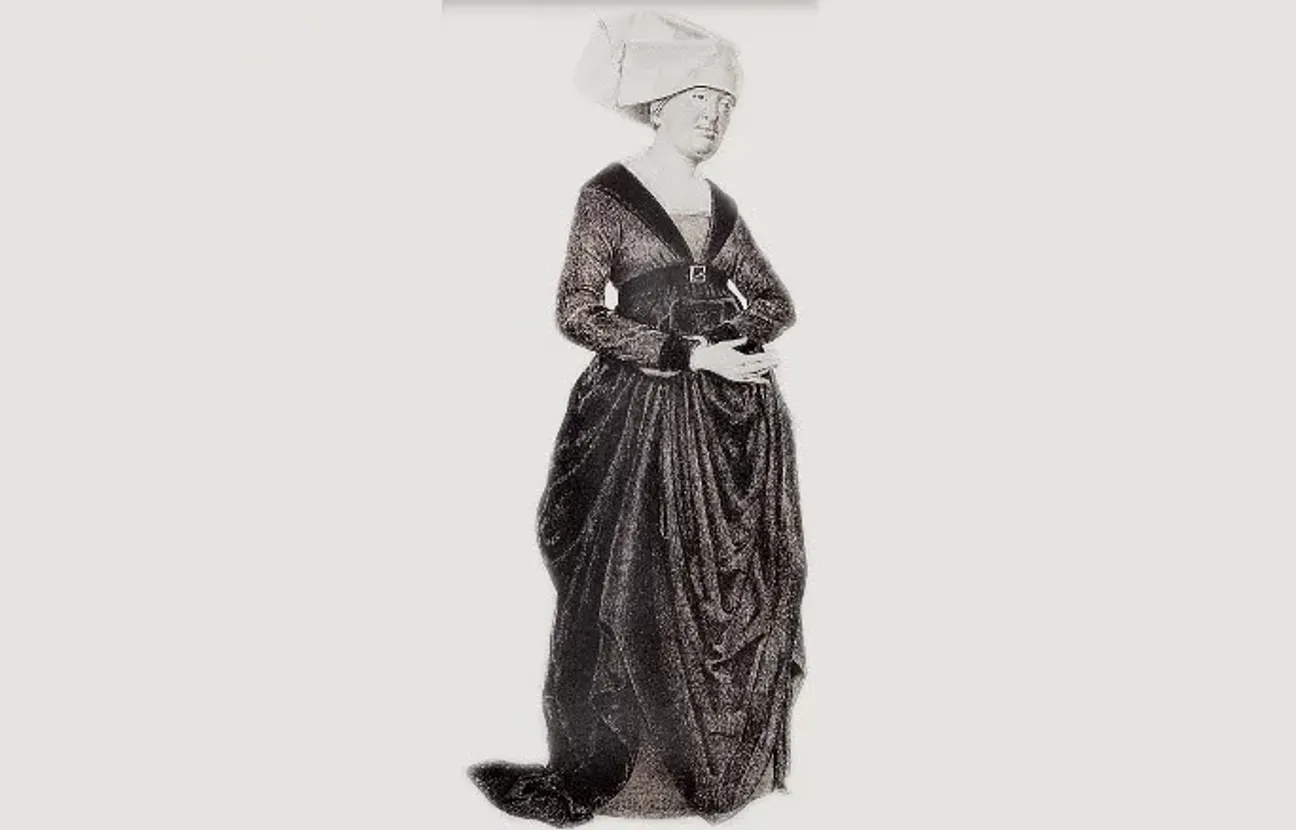
Maria van Loon – Heinsberg marries John IV of Nassau and is the mother of Engelbert ll of Nassau. Maria did much for the Catholic faith and the economy of Breda.
In 1449, she and her husband bring the miraculous ‘Host of Niervaert’ to Breda. The story goes that around 1300, a farmer found this host on a piece of land near Klundert. When touched, the host spontaneously began to bleed. Pilgrims flock to Breda to see the host. This proves very profitable for Breda. Many new visitors mean extra income for the city.
Daan became an artist to inspire people in everyday life, make them laugh and, in his own way, make the world a little more beautiful.
Cimburga of Baden marries Engelbrecht ll of Nassau in 1468. The marriage remains childless. After Cimburga and Engelbert die, all their possessions pass to her husband’s German cousin: Count Henry lll of Nassau.
At the behest of their understandably grateful cousin, an alabaster tomb monument is placed in the Prince’s Chapel of the Grote Kerk Breda, one of the earliest Renaissance monuments in the Netherlands.
Kick is fascinated by the beautiful and frightening things in life. His inspiration mainly comes from walks through the city, the park and the woods.
Claudia van Châlon is the second wife of Henry III of Nassau, one of the most powerful men in Europe. Claudia and Henry have one son: René. From an uncle on his mother’s side, he inherits the principality of Orange in southern France, laying the foundations for the House of Orange-Nassau. It is also the reason the Netherlands turns orange (orange) during national celebrations such as sporting events and King’s Day.
The principality of Orange is known for its salt mines, the principal preservative of the Middle Ages and a fortune in its own right. The Châlons were therefore very wealthy.
René van Chalon dies young on the battlefield. Shortly beforehand, he appoints his German cousin William of Nassau as heir to his fortune and titles. As a result, the 11-year-old William became William of Orange.
Babette is an illustrator, graphic designer and muralist. Her work has a retro feel and is characterised by an interest in surrealism, fashion and urban culture.
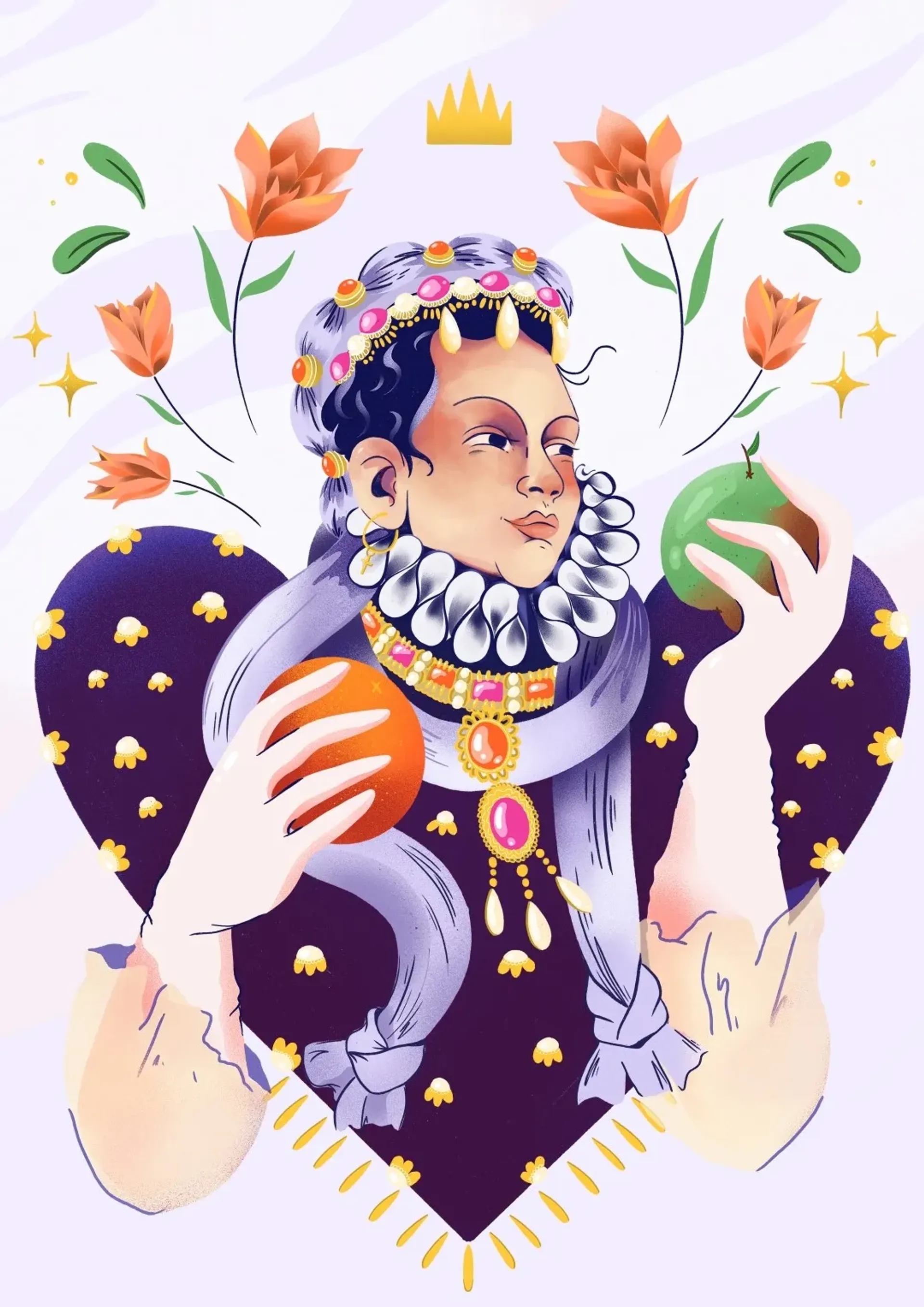
Mencía de Mendoza comes from an old, illustrious Castilian family. She is orphaned at 15, inherits the family fortune and, after 15 months of negotiations, becomes the third wife of Henry lll of Nassau.
Mencía’s impressive wealth brings Breda much grandeur and status. The finest craftsmen settle near her, transforming Breda into a city of learning, a city full of art and elegance. She dies childless.
By creating his own metaphors and symbolism, Sjoerd makes semi-realistic, expressive illustrations that say something about the world we live in.
Anna van Egmond, Countess of Buren, is one of the wealthiest heiresses in the Netherlands. Charles V arranges the marriage of William of Orange-Nassau to Anna, making her his first wife (of four, as it would later turn out). Anna dies young and is buried with her eldest daughter Maria in the Prince's Chapel of the Grote Kerk Breda.
Dymphie’s projects range from illustration to animation. She is particularly interested in visualising complex feelings and ideas.
Anna of Saxony was the second wife of William of Orange-Nassau. From a business point of view, this marriage was advantageous for William, but on his part it had little to do with love. The story goes that William had his brother write his love letters to Anna and collected her to marry her in the company of his mistress. A good start…
In 1571, Anna was forced to divorce William. That year, Anna gave birth to her lover Jan Rubens, the father of the later painter Peter Paul Rubens. William tried to have the marriage annulled by having Anna declared insane and confining her in Dresden in a room without windows. During this process, William met his third wife: Charlotte de Bourbon-Montpensier.
Eliza is an illustrator and stop-motion animator. She works with paper, textiles and linocuts. Sustainability is an important theme in her work.
Charlotte de Bourbon-Montpensier brings no fortune to her marriage to William of Orange-Nassau and is even still living in a convent right up until her wedding. This must be true love, but… the couple have no money. They solve this with ‘annuity money’. Their six daughters are given middle names after a person or region that will henceforth pay the annuity: £2,000 to £3,000 a year.
The girls are born and named: Louise Juliana, Elisabeth Maria, Catharina Belgica, Charlotte Flandrina, Charlotte Brabantina and Emilia the Second Antwerpiana.
Charlotte dies while pregnant with her seventh child.
Falco is an illustrator who works both digitally and traditionally. He is currently focusing mainly on designing and applying tattoos.
Louise de Coligny is the last in line as the fourth wife of William of Orange-Nassau. In 1584, Louise gives birth to a son, Frederick Henry. A month after his baptism, her husband is killed in Delft. After William’s death, Louise is left with serious financial problems.
She raises the six daughters of William’s previous wife, Charlotte de Bourbon, and wears mourning clothes for the rest of her life.
Iris is a freelance visual artist whose primary medium is illustration. Through her cynical and poetic perspective, she depicts ‘normal’ situations in an almost surreal way.
21 February 2027
13 December 2026
6 December 2026
5 December 2026
15 November 2026
8 November 2026
14 November 2026
11 March 2027
28 March 2027
20 December 2026
8 November 2026
12 November 2026


