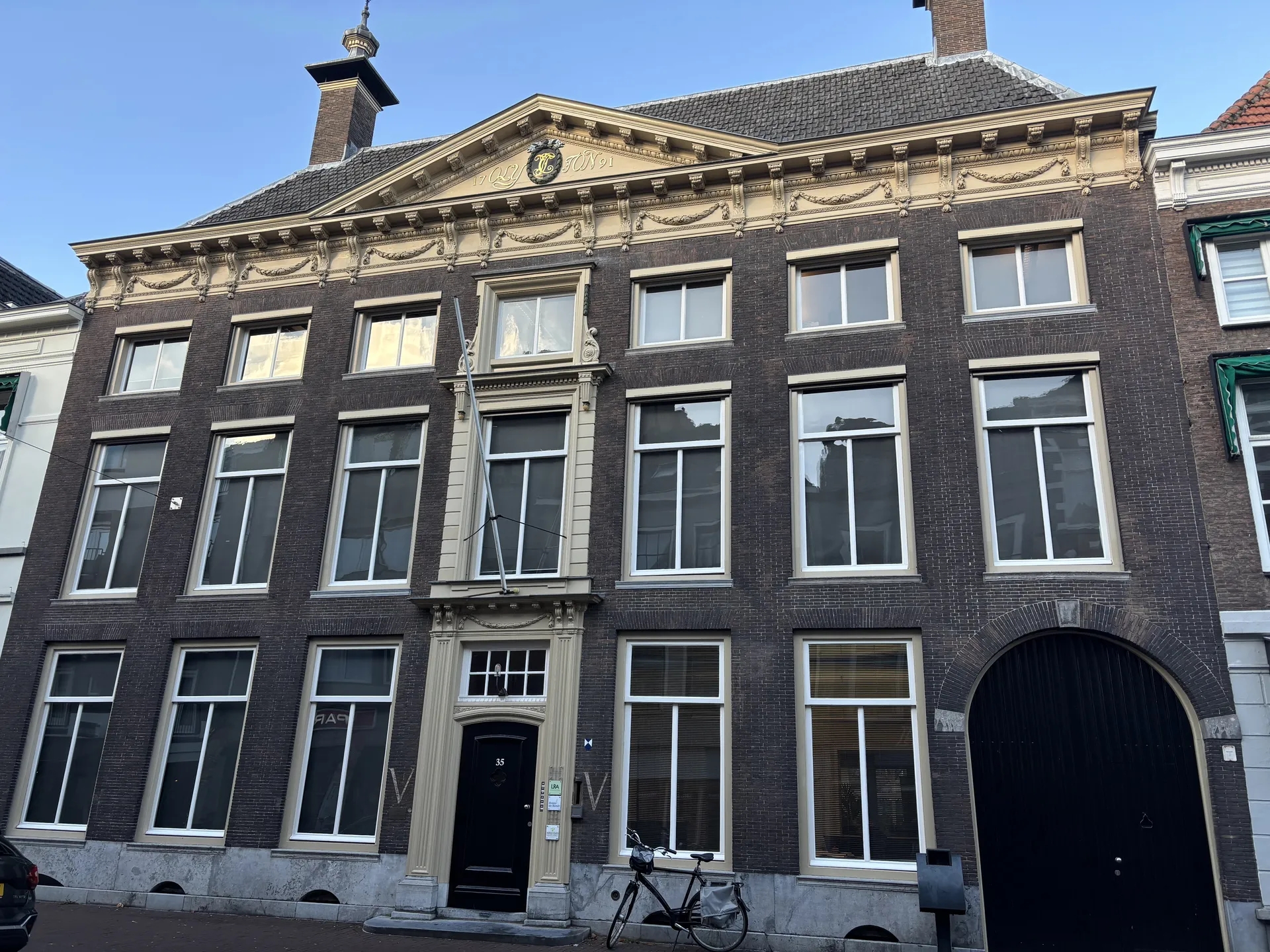
De Olyton
House De Olyton is a national monument with a history dating back to the early 16th century. The earliest known reference dates from 1500, when the property was described as ’t Gasthuyseynde huis, located just outside the first stone city gate. At that time, there was a small inn on this site, which was part of the early urban amenities.
During the major city fire of 1534, the original building was completely lost. Only the medieval cellars remained intact, and they still form one of the oldest parts of the current building. Documents from 1547 mention the plot again, which at that time consisted of multiple houses with a back yard.
The current house was built in 1791 and has been modified and expanded several times since. Various construction traces from these periods remain visible. For example, the characteristic style room dates from the construction period, while in 1812 a coach house with hayloft was added. Two years later, the owner was granted permission to build a linseed mill and a windmill in the inner courtyard, accessible via the gate where horse and carriage could enter.
In 1926, the property came into the possession of banker Ch. Laurijssen, who donated it to the Diocese. This led to a major renovation in which all later extensions were removed. An extensive restoration followed in 1976, giving the building its current form.